
Parents who have recently received an autism diagnosis for their child often describe the weeks that follow as a period of rapid learning. There is suddenly a great deal of information to absorb, and much of it centers on one central question: what kind of help does my child actually need?
Understanding autism therapy options for children is the foundation of that answer. Each therapy targets a different area of development and is recommended based on a child’s specific clinical profile. This guide breaks down the most established therapy types so parents can approach the planning process with clarity.
1. Why Understanding Therapy Options Matters Before You Choose
Choosing a therapy without understanding what it targets is one of the most common missteps families make after a diagnosis. Every therapy type has a defined scope and a body of research behind it. Knowing what each one does prevents families from pursuing services that are not matched to their child’s needs.
The starting point for any therapy decision is the evaluation report. That document identifies a child’s specific strengths and challenges across communication, behavior, sensory processing, and daily living. The recommendations section of the report points toward which services are most appropriate given the child’s profile.
For a detailed look at how evaluation findings translate into a structured care plan, visit the guide to building an autism treatment plan for children.
2. Autism Therapy Options for Children — An Overview
Autism therapy options for children fall into several broad categories. Each category addresses a distinct area of development and is delivered by a different type of specialist. Most children with autism receive more than one type of therapy simultaneously because the areas affected by autism do not exist in isolation.
The most commonly recommended therapies include:
- Applied Behavior Analysis (ABA) — behavioral intervention focused on communication, skill-building, and reducing interfering behaviors
- Speech-language therapy — addresses verbal and nonverbal communication across all contexts
- Occupational therapy — targets sensory regulation, fine motor development, and daily living independence
- Social skills therapy — builds peer interaction, perspective-taking, and conversational skills in structured settings
- Parent training — equips caregivers with strategies to reinforce therapy goals throughout the child’s daily routine
The combination a child receives depends entirely on their evaluation findings, age, and current developmental priorities.
According to the Centers for Disease Control and Prevention, there is no single best treatment for autism, and effective approaches typically combine behavioral, educational, and social-relational interventions tailored to the individual child.
3. Applied Behavior Analysis (ABA) Therapy
ABA is the most extensively researched behavioral intervention available for children with autism. It uses structured teaching methods and positive reinforcement to build functional skills and reduce behaviors that interfere with learning and daily life.
ABA programs are designed and supervised by a Board Certified Behavior Analyst (BCBA). Sessions are delivered by trained therapists and can take place in clinic, home, school, or community settings depending on the child’s goals.
What ABA Addresses
ABA therapy targets a wide range of skill areas, including:
- Verbal and nonverbal communication
- Following instructions and building compliance
- Daily living skills such as dressing, feeding, and hygiene
- Reducing self-injurious or aggressive behaviors
- Building independence across home and community environments
Who Benefits Most From ABA
ABA is appropriate for children across the full spectrum of autism severity levels. Intensity varies based on the child’s support level, with some children receiving focused ABA targeting specific skills and others receiving comprehensive programs addressing multiple developmental domains simultaneously.
4. Speech-Language Therapy
Communication differences are a core feature of autism spectrum disorder. Speech-language therapy addresses those differences across a wide range of profiles, from children who are highly verbal to those who are minimally verbal or nonverbal.
For verbal children, therapy focuses on pragmatic language skills. These include maintaining a two-way conversation, understanding implied meaning, and using language appropriately across different social situations.
According to the American Academy of Pediatrics, introducing augmentative communication to children with autism who are not yet using verbal communication does not prevent them from learning to speak, and there is evidence it may actually stimulate speech development by building symbolic understanding first.
Augmentative and Alternative Communication (AAC)
For children who have limited or no functional speech, therapy may introduce an AAC system. Common tools include:
- Picture Exchange Communication System (PECS) — a structured approach where the child exchanges pictures to communicate wants and needs
- Communication boards — visual displays of symbols, words, or images the child uses to express themselves
- Speech-generating devices — electronic tools that produce spoken words when the child selects symbols or text
AAC systems are selected based on the child’s cognitive profile and readiness. They are adjusted as the child’s communication skills develop over time.
5. Occupational Therapy
Many children with autism experience sensory processing differences that affect their ability to engage, focus, and participate in daily activities. Occupational therapy addresses these differences alongside fine motor development and self-care skills.
An occupational therapist evaluates the child’s sensory profile, motor planning abilities, and daily living skill level. Goals are then written to address the specific gaps identified in that evaluation.
Common Focus Areas in Occupational Therapy
- Fine motor skills such as handwriting, drawing, cutting, and using utensils
- Sensory regulation strategies for managing overstimulation or undersensitivity
- Self-care routines including dressing, grooming, and meal preparation
- Attention and organization within structured environments
- Transitions between activities or settings
Occupational therapy goals are closely coordinated with the behavioral and communication components of the child’s overall plan. Unaddressed sensory needs frequently interfere with progress in other areas, which is why OT is often recommended alongside ABA and speech-language therapy.
6. Social Skills Therapy
Social interaction differences are among the most defining features of autism spectrum disorder. Social skills therapy provides structured, guided instruction to help children develop the interpersonal skills that do not emerge naturally without support.
Programs vary in format but most use a combination of direct instruction, modeling, role-playing, and peer practice. Skills are broken into teachable steps and practiced in controlled settings before being generalized to real-world environments.
Skills Commonly Targeted
- Initiating and maintaining conversations
- Taking turns in play and dialogue
- Reading facial expressions and body language
- Understanding personal space and social boundaries
- Managing disagreements and unexpected social situations
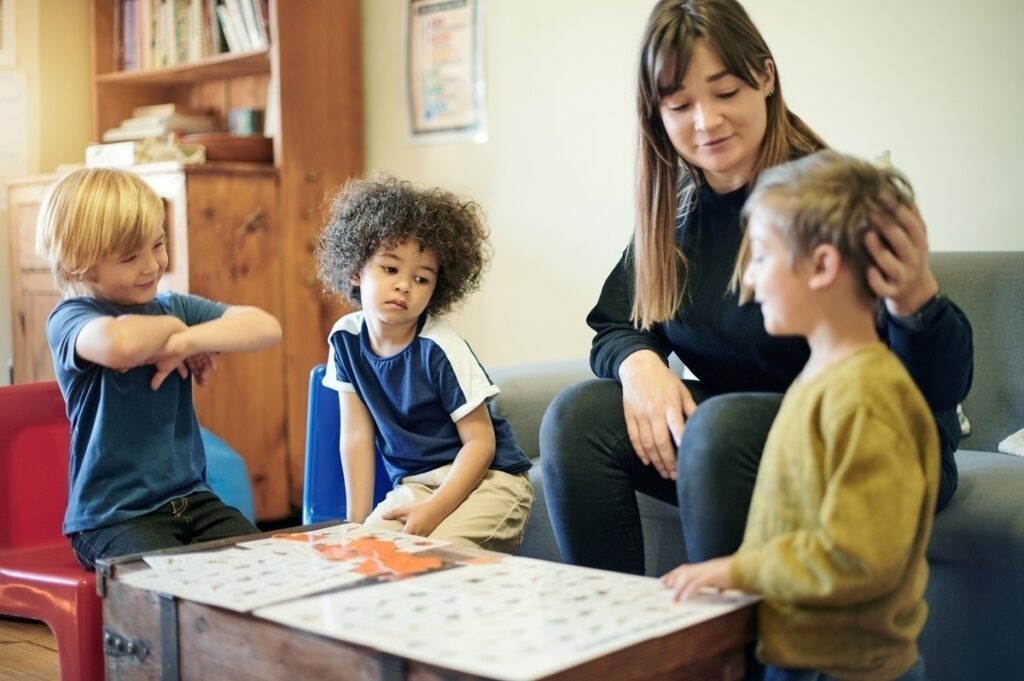
Social skills groups are a common delivery format. They provide a structured environment with real peer interaction, giving children the opportunity to practice skills with guided support before applying them independently.
According to the National Institute of Mental Health, treatments and supports for autism are most effective when they address the individual’s specific needs and are delivered by trained professionals in a structured, consistent way.
To learn more about what autism support services look like for children in Nevada, visit the Autism in Children service page.
7. How to Know Which Therapy Your Child Needs
No parent should have to guess which autism therapy options for children apply to their child. The evaluation report answers that question by identifying the specific areas where the child needs support and recommending services accordingly.
A few guiding principles help frame the decision:
- Start with the evaluation — therapy decisions made without clinical findings are rarely well-targeted
- Match therapy to need — each service should address a documented area of challenge, not a general assumption about what children with autism need
- Prioritize functional impact — begin with the therapies most likely to improve the child’s daily life and safety first
- Coordinate across providers — therapies are most effective when the team communicates and goals are aligned across settings
- Review regularly — autism therapy options for children should be reassessed as the child develops and priorities shift
The goal is not to enroll a child in every available therapy at once. It is to build a targeted plan that matches the child’s current needs and adjusts over time.
For families in the Las Vegas area looking for locally available services, the Autism in Children Las Vegas page provides information on evaluation and care options specific to Nevada.